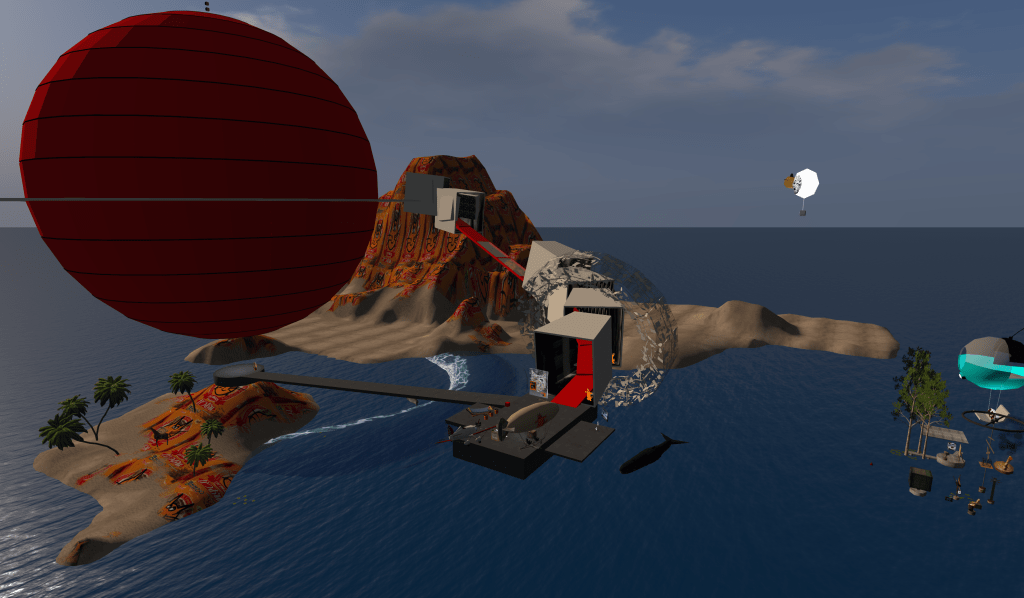
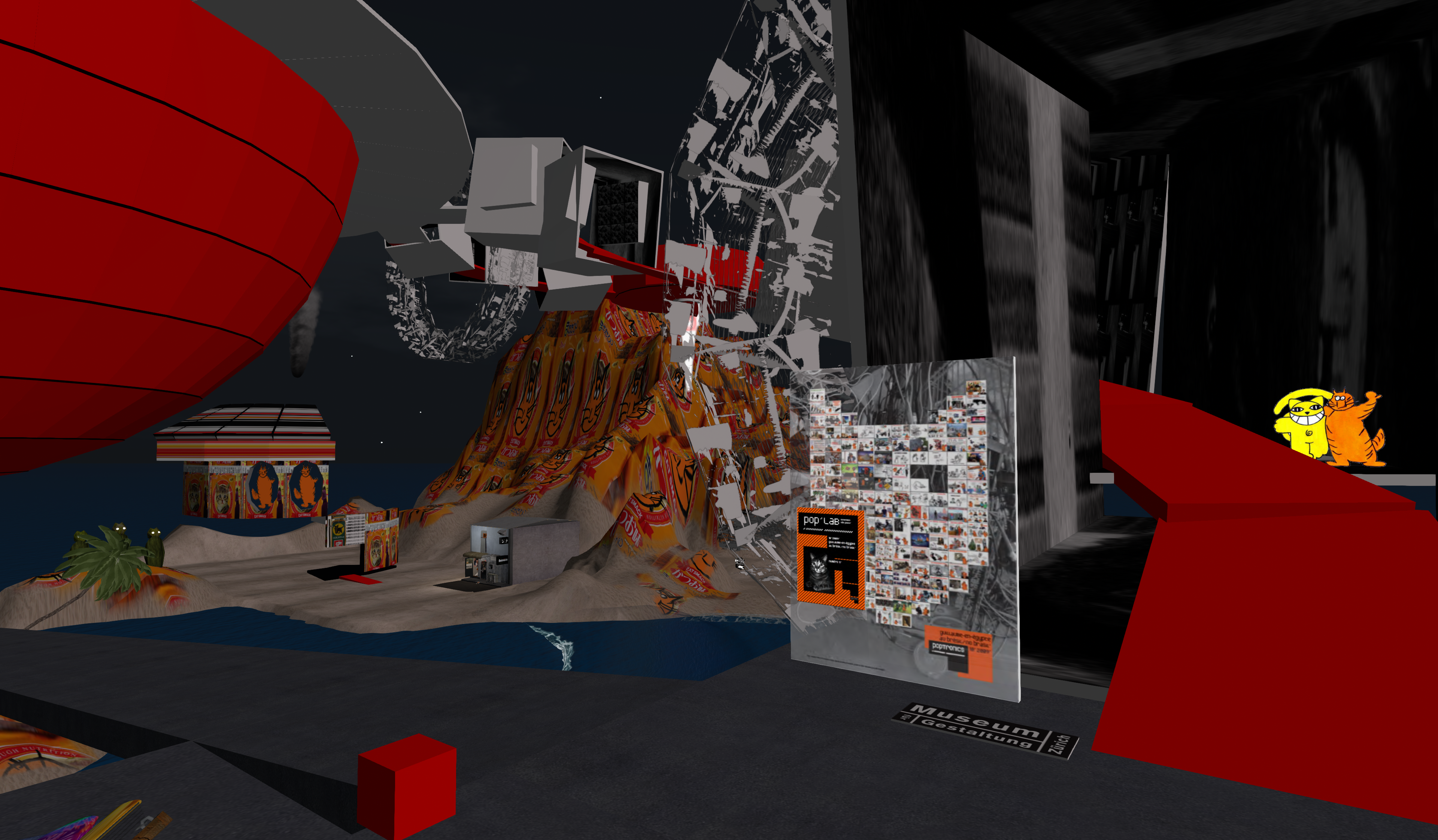
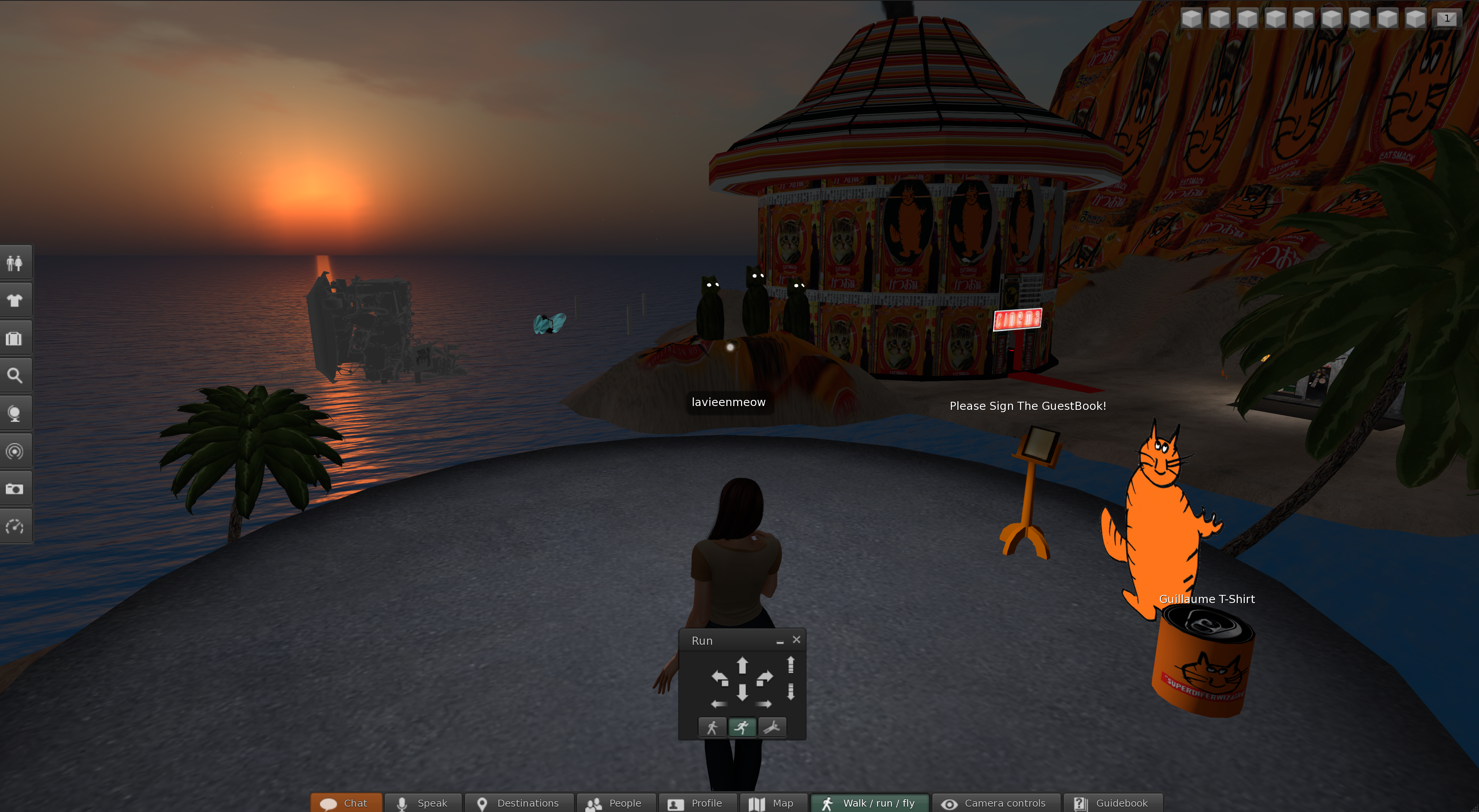
When I visited Ouvroir, filmmaker Chris Marker’s archipelago in Second Life, it was night. A handful of stars were visible, and the ocean was calm except for a few inlets where waves were breaking in the wrong direction. Guillaume the cat implored me to dance but instead, I fell through the floor. Nobody else was there except for many Guillaumes, a bull, a giraffe, a squid, and a whale that slowly circled the island. I rode the bull for 17 seconds and received a Guillaume t-shirt that I never figured out how to wear.
I would describe the experience as “weird and eerie.” For instance, when I arrived, Guillaume welcomed me and said, “Leave a comment in the book beside me and I will deliver it to Chris.” Chris Marker died in 2012. Either Guillaume is now operating as a medium, or, more likely, I had wandered into a space that had been left mostly untouched for 15 years.
Ouvroir, ca. 2008-2010
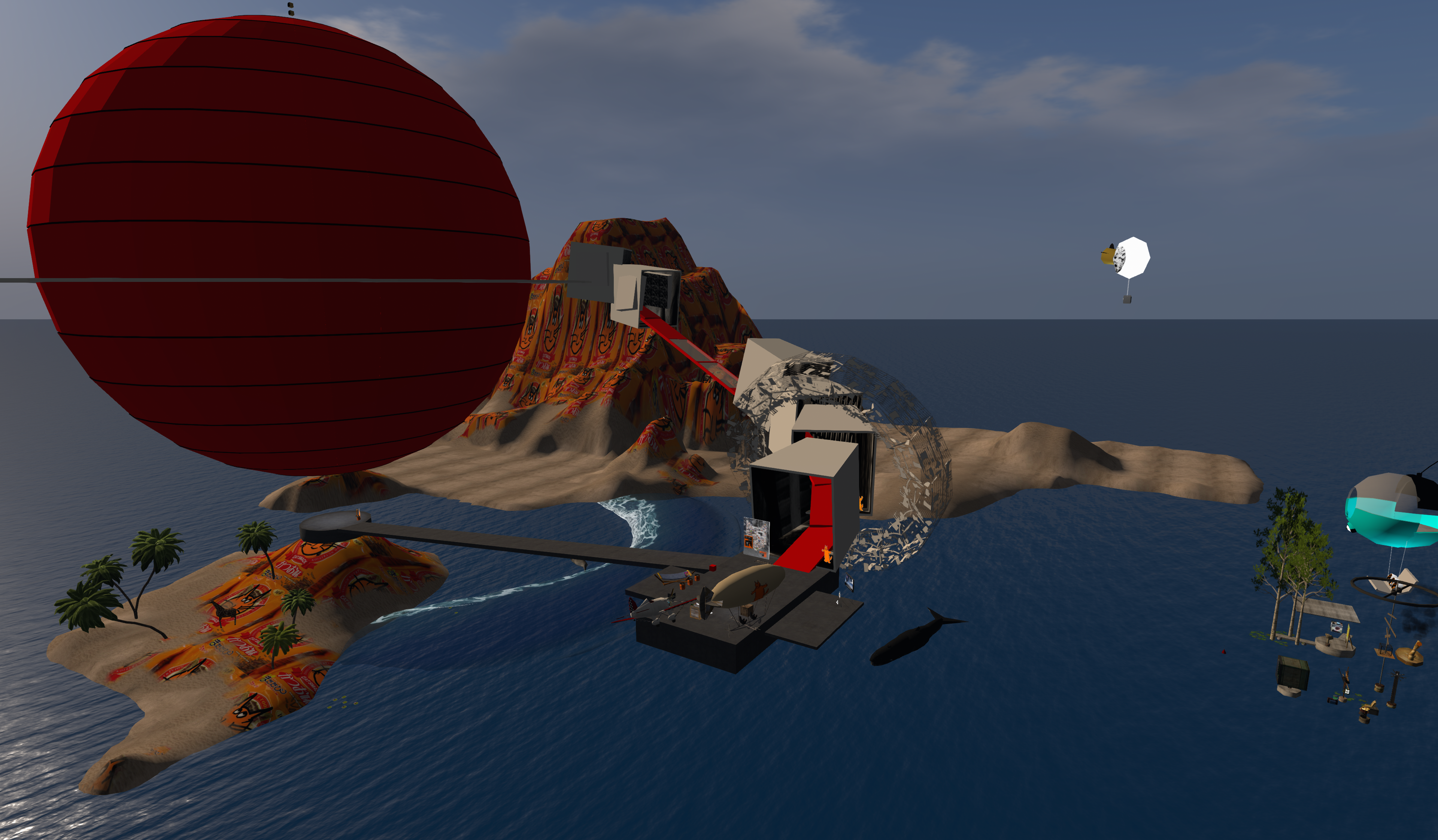
Ouvroir was originally created by Chris Marker, artist Max Moswitzer, and Guillaume as a component of the Museum für Gestaltung Zürich’s 2008 exhibition Chris Marker: A Farewell to Movies. It has an area of 60,240 square meters and a day that lasts 4 hours. Its focal point is a spherical three-story museum that features photos of Marker’s inspirations, Marker’s own photography, and stills from his films. There are reimagined silent movie posters and an embedded short film about a rat called Leila Attacks. Marker’s writings on images, art, and war, are given to visitors in the form of notecards (these are not to be missed; I wished there were more of them).
Here are a few ways to observe Ouvroir as it appeared soon after its creation:
- Ouvroir, Marker’s own 2010 film about Ouvroir (h/t arlo of the neointeractives!)
- A three-part recording of a tour of Ouvroir by an organization or initiative called Fiteiro Cultural (part one, part two, part three)
- A Harvard Film Archive tour and interview with Marker (as Sergei Murasaki). This one feels a little disjointed because the interviewer’s (curator Haden Guest’s) avatar can’t stop dancing, and because he and Marker are relentlessly pursued by throngs of other avatars. But it is very cool to see Marker himself in Ouvroir.1
“An island inhabited by artificial ghosts”: Ouvroir and The Invention of Morel
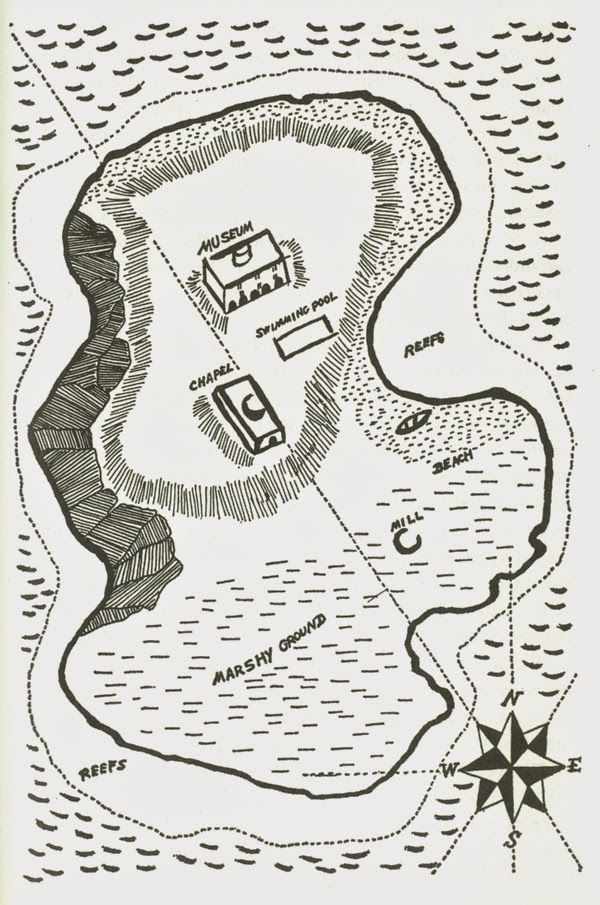
Marker has stated in interviews and in Ouvroir the film that Ouvroir the island was inspired by The Invention of Morel, a 1940 novella by Argentine writer Adolfo Bioy Casares. The story follows a fugitive–the narrator–who escapes to what he thinks is an abandoned island, only to find that it is inhabited by people from another era who look right through him, and who play the songs “Valencia” and “Tea for two” all night long. He comes to realize that the people have all died; the figures he has been watching are three-dimensional projections recorded and replayed by an invention that is powered by the island’s strange and vigorous tides.
There are certainly some superficial connections between Ouvroir and the novella: Both Ouvroir and Morel’s island are carefully mapped out; both are dominated by a museum; and both museums feature a glass floor with fish underneath.
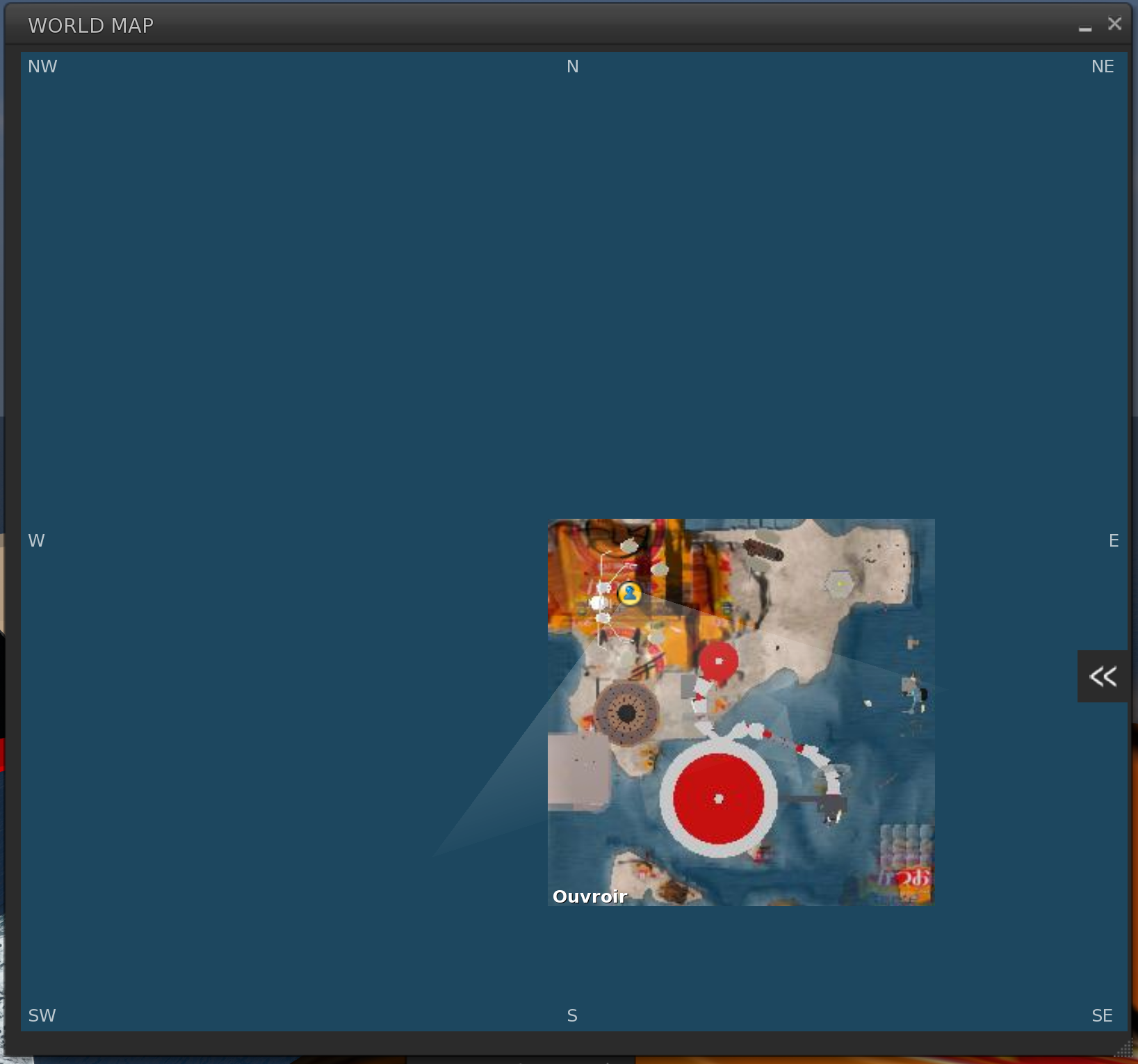
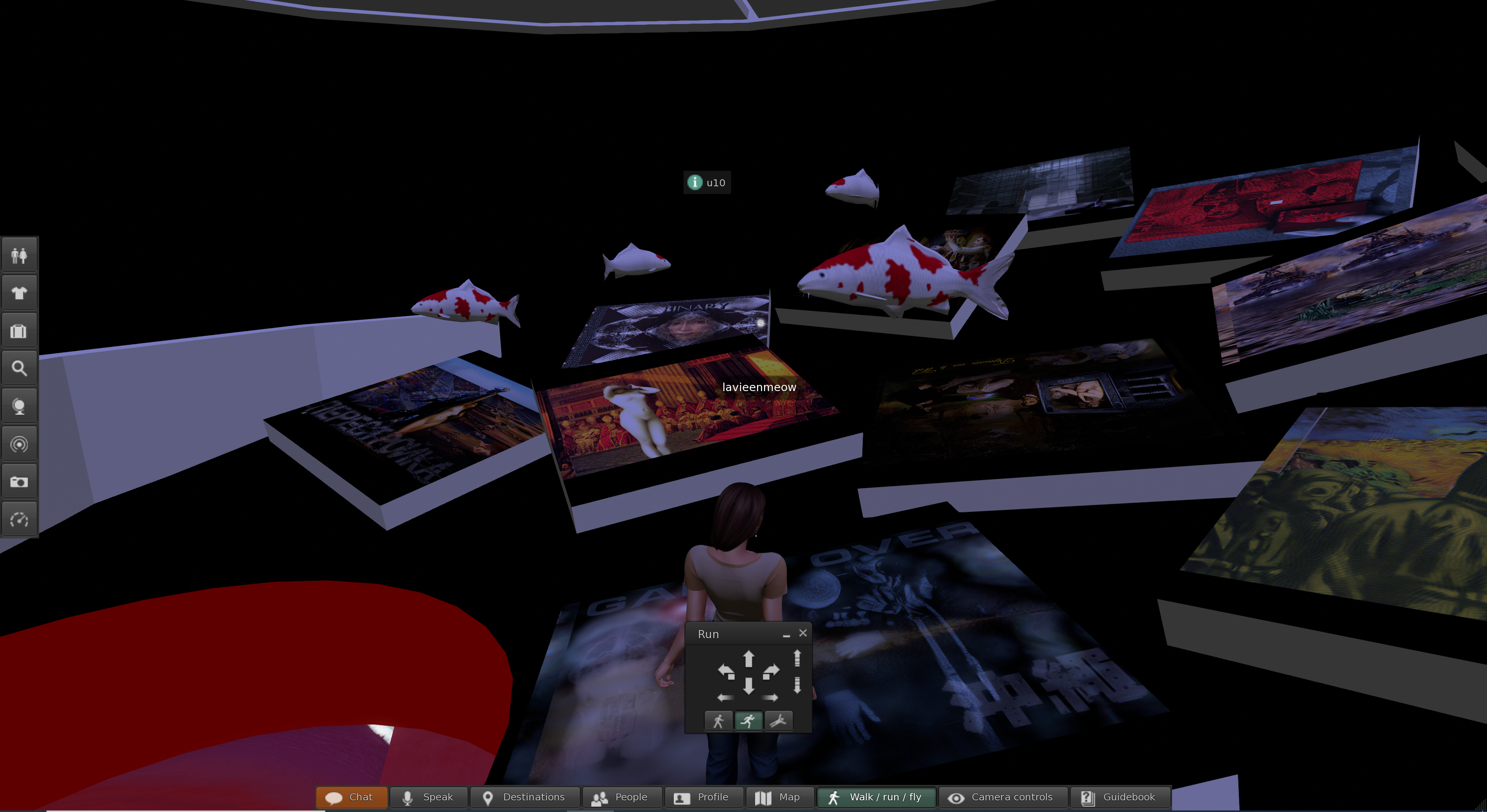
But there are deeper connections as well–about images, and what they can and can’t capture or preserve. Ouvroir is all about the images and image-makers that inspired Marker, as well as the images that he captured and created over the course of his career. Collaged images slide over tiles that drift among wandering koi; images wink from a Méliès moon and a Tarkovsky lighthouse; images stutter in the galleries.
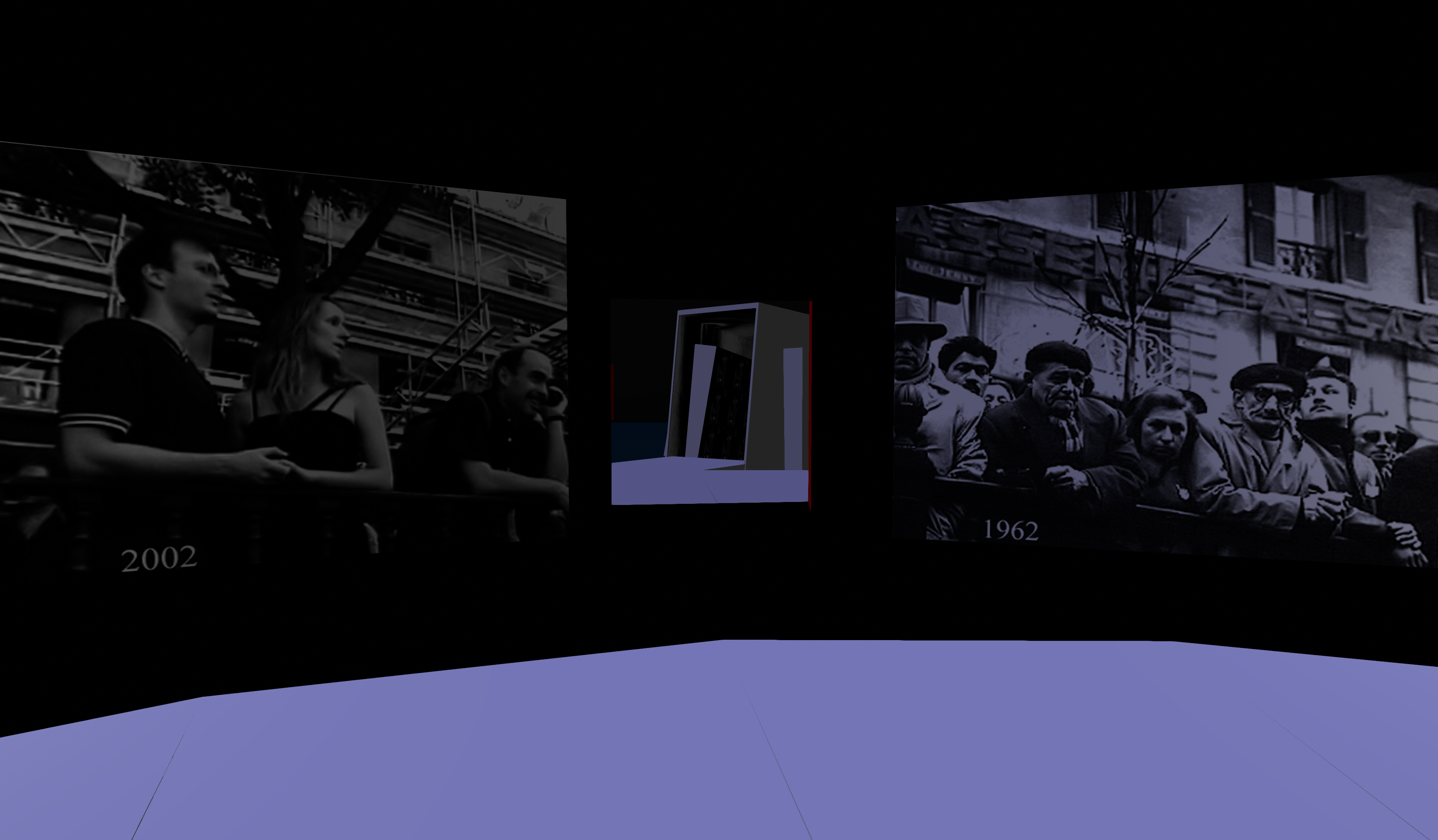
When visitors enter the museum, they are given a notecard titled “Watch the tree,” which directs their attention to two photos on either side of the entrance. The photos, of the same balcony at the place de la République, were taken by Marker, 40 years apart. In the 1962 photo, it is cold. The people leaning against the barricades are bundled in trenchcoats and scarves. Behind them is a scraggly young tree that looks more like a television antenna than a tree. In the 2002 photo, it is summer. A young man in a dark polo shirt holds the hand of a young woman in a tank top. Behind them, the balcony is hidden by scaffolding, and the tree is taller, and full of leaves. But Marker’s notecard is not about the two images depict; it is all about what they have failed to capture, and instead only gesture at: “In between I have been in Japan, Korea, Bolivia, Chile. I have filmed students in Guinea-Bissau, medics in Kosovo, Bosnian refugees, Brazilian activists, animals everywhere. I covered the first free elections in East Germany after the fall of the Wall, and I sniffed the first moments of perestroika in Moscow, when people weren’t afraid to talk to each other anymore. I traded film for video and video for the computer. In the middle, on the balcony, the tree has grown, just a little. Within these few inches, forty years of my life.”
Casares’s novel, too, explores the relationship between images and reality. The narrator complains about being trapped among the projected people, who repeat a week-long cycle of tennis playing, chatting, swimming, and watching the sunset: “I experienced a feeling of scorn, almost disgust, for these people and their indefatigable, repetitious activity. They appeared many times up there on the edge of the hill. To be on an island inhabited by artificial ghosts was the most unbearable of nightmares…” (75). He falls in love with one of the projections, and ultimately makes himself into an ghost too: After rehearsing extensively with the projections, he records himself interacting with them as though he was part of the original party, adding another layer to the recording. As he is dying from the sickness brought on by the recording process, he laments, “My soul has not yet passed to the image; if it had, I would have died, I (perhaps) would no longer see Faustine, and would be with her in a vision that no one can ever destroy” (103).
Marker identifies the connection between Second Life and The Invention of Morel as a tension between the real and the virtual. In this exchange, from the French publication Les inrockuptibles, translated and presented on the Criterion website, Marker is represented by the initials SM, for his avatar Sergei Murasaki.
SM: Have you read Adolfo Bioy Casares’s The Invention of Morel?
IA: No, neither of us have read it. Shame on us?
SM: Well, it’s nothing to be proud of. In any event, it’s exactly the world of that masterpiece that I came to find in SL.
IA: Can you describe it for us?
SM: A dream state. The sense of porousness between the real and the virtual.
But when I visited Ouvroir this week, I did not feel any porousness between the real and the virtual. None of it felt remotely real to me. The boundaries were solid, impermeable. I did not feel this tension back in 2005 either, when I first created a Second Life account for grad school. My avatar floated up to the ceiling and got stuck there, so I quit, never logging in again until now. For me, the porousness I experienced in Ouvroir was not between the real and the virtual; it was a temporal porousness, a tension between the past and the present.
Ouvroir, ca. 2026
In 2013, Second Life had an average of one million monthly users. In late March of 2026, there are around 30-40,000 accounts logged in at any given time, according to the Second Life api. These users may be buying and selling things, playing games, breeding virtual animals, and having sex.
On Ouvroir, the rivers have dried up, and only a few palm trees remain (it seems that not even Ouvroir has escaped climate change). The steampunk/Orientalist submarine that had been docked off one of the sand dunes has long ago departed for other realms, and the wreck of the red airplane has been removed. The giant black cat has wandered from the island to a dock off the floating shack, where it stretches out and blinks sleepily (you can still take a nap on its back). But Ouvroir is still remarkably intact. What changed is that it is now completely deserted, except for its restless ghosts.
And this is what resonates with me most (and for me, this is the magic of Morel, too): the moments when the traces of past human activity–signs that draw attention to what is no longer there–collide with the present. Like when Guillaume promises to deliver my message to Chris, even though Chris has died. Or the scenes in the novel when the recorded projections superimposed on the actual island produce two suns, and two sets of tides that go in and out of sync. The narrator expresses this tension in physical terms: “I must admit that I feel slightly uncomfortable when the images brush against me (especially if I happen to be thinking about something else)” (79).
The second time I visited Ouvroir, a pink sun (just one) was sinking into the horizon. I watched the glowing white eyes of the “Rapa Nui cats” blink on. I wondered about the times that I brushed against these images, and about the traces that my presence might leave. The time I spent in Ouvroir will be reflected on the island’s “traffic” statistic. The next person who visits will see that the last visitor rode the bull for 17 seconds. And it made me wonder: Maybe this is what Marker intended. Maybe, to experience Ouvroir as a deserted island on a mostly deserted platform is to experience it in its final and most Morel-like form. The novel’s narrator reflects on the week-long recording he has been interacting with: “Our life may be thought of as a week of those images–one that may be repeated in adjoining worlds” (85). I like to think of Ouvroir as one of those adjoining worlds.
- A couple of other interesting tidbits: Around 3 minutes in, Guest mentions that Marker was introduced to him by Naomi Yang and Damon Krukowski of the late-90s shoegaze band Galaxie 500 (their press, Exact Change, published Marker’s 1997 CD-ROM Immemory). And then around 22 minutes in, the Guest says that you actually have to pay to lease land in Second Life and it’s quite expensive. He reveals that the Ouvroir would have been taken down if the Centre Pompidou had not come through at the last minute with funding to extend the lease. This totally piqued my curiosity, so I investigated a bit further: The Second Life region “Chris Marker/Museum fuer Gestaltung Zuerich,” is controlled by the estate “Synth.” Both region and estate are still owned by user MosMax Hax (presumably Max Moswitzer), who originally claimed them on July 20, 2004. As far as I can tell, the current monthly maintenance fee for a full region in Second Life is $209 USD. ↩︎
 La Vie en Meow
You must be logged in to post a comment.